
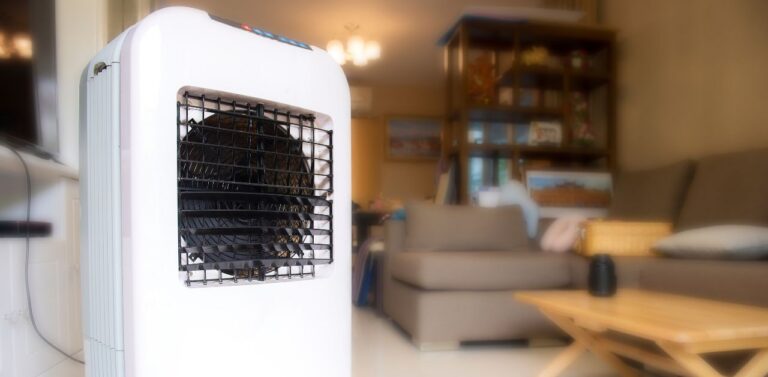
If you’re considering an evaporative cooler installation for your home, you’re probably asking three very practical questions: How much will it cost? How long will it take? And will it actually work well where I live?
They’re exactly the right questions to ask. Evaporative cooling is one of the most cost-effective and energy-efficient ways to cool an Australian home, but it’s not the right fit for every property or every climate. Understanding what goes into the installation, what drives the cost, and what affects performance will help you make a confident decision before you spend a cent.
Here’s everything you need to know.
What Is an Evaporative Cooler and How Does It Work?
Before diving into costs and timelines, it’s worth understanding the basics.
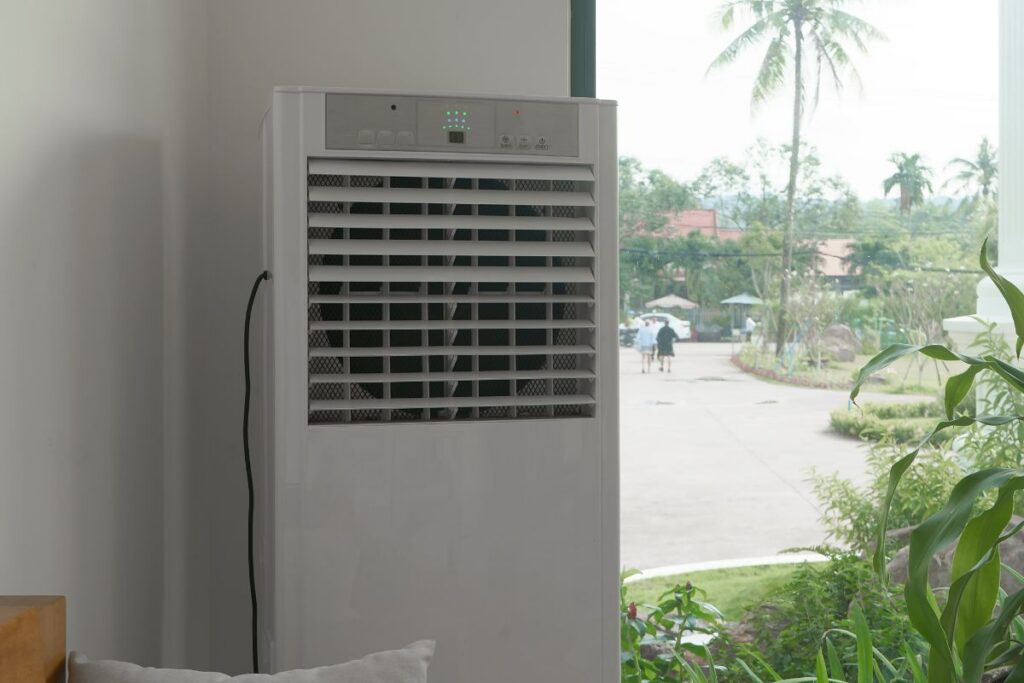
An evaporative cooler draws warm outside air through water-saturated filter pads. As the air passes through the wet pads, moisture evaporates and the air temperature drops. Ceiling vents or a central outlet then push that cooled, fresh air through your home, while open windows and doors let the warm indoor air escape.
The result is a continuous supply of cool, fresh air rather than the recycled air you get from a refrigerated system. It’s a natural process, which is why evaporative cooling uses significantly less electricity than conventional air conditioning, and why it has no need for refrigerant gases.
The key to understanding the technology is this: evaporative cooling works by adding moisture to the air. This means its effectiveness is directly tied to how dry or humid the surrounding environment already is. More on that shortly.
How Long Does Evaporative Cooler Installation Take?
For most Australian homes, a professional ducted evaporative cooler installation is completed within 1-2 days. However, the actual timeframe depends heavily on the scope of work involved.
Here’s how the timeline generally breaks down:
Roof unit installation is usually the quickest part of the job. Installers mount the cooling unit securely to the roof, connect it to your home’s water supply, and seal it to prevent leaks. For a straightforward installation, they can complete this step in a few hours.
Ductwork and ceiling outlets are where time varies most. A new evaporative cooler installation in a home with no existing ductwork requires the installer to design and run the ducting through your ceiling cavity and cut openings for each outlet. The more rooms and the more complex the layout, the longer this takes. A four-bedroom home with multiple outlets across two levels will naturally take longer than a compact single-storey property.
Replacement installations are typically much faster. If you’re replacing an old evaporative unit with a new one and the existing ductwork is in good condition, installers can often complete the job in half a day. The ducting stays, the old roof unit comes off, and the new one goes on in its place.
Electrical and control wiring adds some time as well, particularly if you’re upgrading to a smart controller or zoned system. Basic manual controls are quicker to wire than integrated Wi-Fi-enabled systems.
As a rough guide:
- Simple replacement (reusing existing ductwork): 3 to 5 hours
- New installation, single-storey home: 1 day
- New installation, larger or multi-storey home: 1 to 2 days
- Complex installations with extended ductwork or difficult roof access: up to 2 days or more
Always allow buffer time around your installation date, particularly during peak summer booking periods when technicians are in high demand.
How Much Does Evaporative Cooler Installation Cost in Australia?
Cost is where the numbers vary quite a bit depending on the type of system, the size of your home, and the amount of work involved.
Unit costs alone break down roughly as follows:
- Portable or window-mounted units: $50 to $300 (not including installation)
- Ducted evaporative cooler units: $2,300 to $5,000+, depending on brand, size, and features
Total installed cost for a ducted system is what most homeowners are really asking about. Here’s what the current market looks like across Australia:
- Replacement installations (existing ductwork reused): From around $2,800
- New ducted installation in a standard home: $3,000 to $6,000
- Larger homes, premium brands, or complex ducting: $6,000 to $10,000+
To put this in perspective, a fully ducted refrigerated air conditioning system for the same home can cost anywhere from $7,000 to $15,000 or more. Evaporative cooling typically offers a significant upfront saving, often 30 to 50 percent less than an equivalent refrigerated system.
Labour rates for an evaporative cooler installation generally run between $80 and $120 per hour, although most installers will quote a fixed price for the full job rather than charging by the hour.
What Drives the Cost Up?
Several factors can push your installation quote toward the higher end:
- Home size and ceiling height. Larger homes require bigger units with higher cooling capacity, more ducting, and more outlets. Double-storey homes are more complex to duct and can add to both time and labour costs.
- Roof type and access. Tiled roofs with limited access points take longer to work with than metal roofs. If roof access is difficult, installers may need to spend more time rigging safe access.
- Number of outlets. Each additional ceiling outlet requires more ducting and more cutting. A home with eight outlets will cost more than one with four, all else being equal.
- Brand and model. Australia’s evaporative cooling market is dominated by Seeley International, whose three brands cover different market segments. Coolair is the more affordable range; Braemar sits in the mid-range and is known for using up to 80 percent less electricity than refrigerated systems; Breezair is the premium option with inverter technology and energy efficiency significantly better than comparable systems. The brand you choose will affect both the unit cost and the long-term running cost.
- New ductwork versus existing. Installing new ductwork from scratch is always more expensive than replacing a roof unit while keeping existing infrastructure.
Running Costs
This is where evaporative cooling really shines. Because the system relies on a fan and a water pump rather than a compressor and refrigerant, the electricity consumption is dramatically lower than a conventional air conditioner.
High-efficiency ducted evaporative systems can use up to 75 percent less electricity than a comparable reverse cycle system. Some premium units, when sized appropriately, have annual electricity running costs well under $100 for the average home. Annual running costs in the range of $200 to $300 are commonly cited for whole-home ducted systems, compared to several hundred to over a thousand dollars for refrigerated alternatives.
Water usage is the trade-off. Evaporative coolers consume water during operation, which will add a small amount to your water bill. The exact amount depends on the unit, your local water rates, and how often you run the system.
What Affects Evaporative Cooler Performance?
This is the most important part to understand before committing to an evaporative cooler installation. The technology is excellent in the right conditions, and genuinely limited in the wrong ones.
1. Humidity Is the Single Biggest Factor
Evaporative cooling works by adding moisture to the air. If the outside air already contains a lot of moisture, there’s less room for evaporation to occur, and less cooling takes place.
The thresholds to know:
- Below 30% relative humidity: Evaporative cooling performs at its absolute best
- 30 to 50% relative humidity: Performance is good to moderate, still effective in most cases
- Above 50% relative humidity: Effectiveness begins to drop noticeably
- Above 70% relative humidity: The system provides little to no cooling benefit
This is why evaporative cooling is well-suited to Melbourne, Adelaide, Canberra, and Perth, where summers are typically hot and dry. It’s why it’s far less suited to coastal Queensland, Darwin, and humid parts of New South Wales, where summer humidity regularly exceeds 60 to 70 percent.
Hot temperature alone is not the deciding factor. A scorching 40-degree day in Mildura with 20 percent humidity is an ideal scenario for evaporative cooling. A 32-degree day in Brisbane with 75 percent humidity is exactly when evaporative cooling lets you down.
2. Ventilation and Airflow Within the Home
Unlike refrigerated air conditioning, which works best in a sealed home, evaporative cooling actively requires airflow to function. The system constantly pushes fresh air in, which means the warm air inside needs somewhere to go.
Windows and doors need to be partially open to allow this air exchange. Without adequate ventilation, cool air cannot properly circulate, pressure builds up inside the home, and you may even see condensation pooling on walls and tiles.
Getting ventilation right is part of what a quality installation should address. Proper sizing of the unit relative to the home’s floor area ensures there’s enough airflow to refresh the entire volume of air in the home every few minutes, which is the standard benchmark for effective evaporative cooling.
3. System Sizing
Underpowered systems are one of the most common causes of disappointing evaporative cooling performance. A unit that’s too small for your home will struggle to cool effectively on the hottest days, which is precisely when you need it most.
Evaporative coolers are rated by how much air they move, measured in cubic metres per hour (CMH). The right CMH rating for your home depends on the total volume of the space being cooled and how many air changes per hour the system is designed to deliver.
An experienced installer will size the system appropriately based on your home’s specific dimensions and layout, rather than defaulting to whatever the next available model happens to be.
4. Filter Pad Condition and Maintenance
The cooling pads are at the heart of the system. They need to be consistently saturated with water and free from blockages for the evaporation process to work efficiently.
Over time, pads accumulate dust, debris, and mineral deposits from the water supply. In hard water areas, scale buildup can be particularly significant, reducing the pad’s ability to absorb water and limiting the system’s cooling capacity. Regular cleaning and timely pad replacement are essential to maintaining performance.
Neglected pads don’t just cool less effectively. They can become a breeding ground for mould and bacteria if left damp and dirty. This is both a performance issue and a health consideration.
As a general maintenance guide:
- Monthly during the cooling season: Check water levels, inspect the unit, clear any debris from the sump
- Start of each season: Clean pads, inspect the pump and fan, check the water distribution header
- Every one to three years: Replace cooling pads, depending on water quality and usage
- Annually: Professional service to inspect all components, check for leaks, and ensure the system is operating at full efficiency
5. Home Insulation and Ceiling Height
A well-insulated home retains cool air better and reduces the workload on any cooling system. Poor insulation means the cooled air dissipates quickly, and the system runs longer to maintain a comfortable temperature.
Ceiling height also plays a role. Higher ceilings mean a greater volume of air to cool, which may require a larger unit than you’d expect for the same floor area. This is worth discussing with your installer during the quoting stage.
6. Roof Orientation and Unit Placement
Where the unit is placed on the roof affects how it draws air and how efficiently it operates. Most ducted systems are installed in a downflow arrangement on the roof, drawing air from outside and pushing it down through ceiling ducts. Positioning the unit away from areas of exhaust air (such as near the laundry or kitchen ventilation) ensures the system draws in the cleanest possible air.
Is Evaporative Cooling Right for Your Home?
Evaporative cooling is one of the smartest investments available for homeowners in dry, inland, and southern Australian climates. The upfront cost is lower than refrigerated alternatives, the running costs are dramatically less, the fresh air delivery is a genuine comfort advantage, and modern units from premium brands are quiet, smart, and long-lasting.
For homes in humid coastal regions, or for households that need reliable cooling on the rare but intense humid days that even Melbourne and Adelaide experience during summer, understanding the limitations matters. Some households choose to pair an evaporative system with a small backup split system for those high-humidity periods, getting the best of both technologies.
The most important step is getting a proper assessment of your home, your local climate, and your specific cooling needs before committing to an evaporative cooling installation or any other system installation.
Book a Service or Installation with Tailored Heating and Cooling
At Tailored Heating and Cooling, we take the guesswork out of cooling. Whether you’re looking to install a new evaporative system, replace an ageing unit, or get a professional service to restore your existing cooler to full performance, our team brings the expertise to get it right the first time.
We’ll assess your home, recommend the right system for your space and climate, and handle the installation from start to finish, professionally and on time.
Ready to get started? Book a service with Tailored Heating and Cooling today and keep your home cool.